 Image 1 of 6
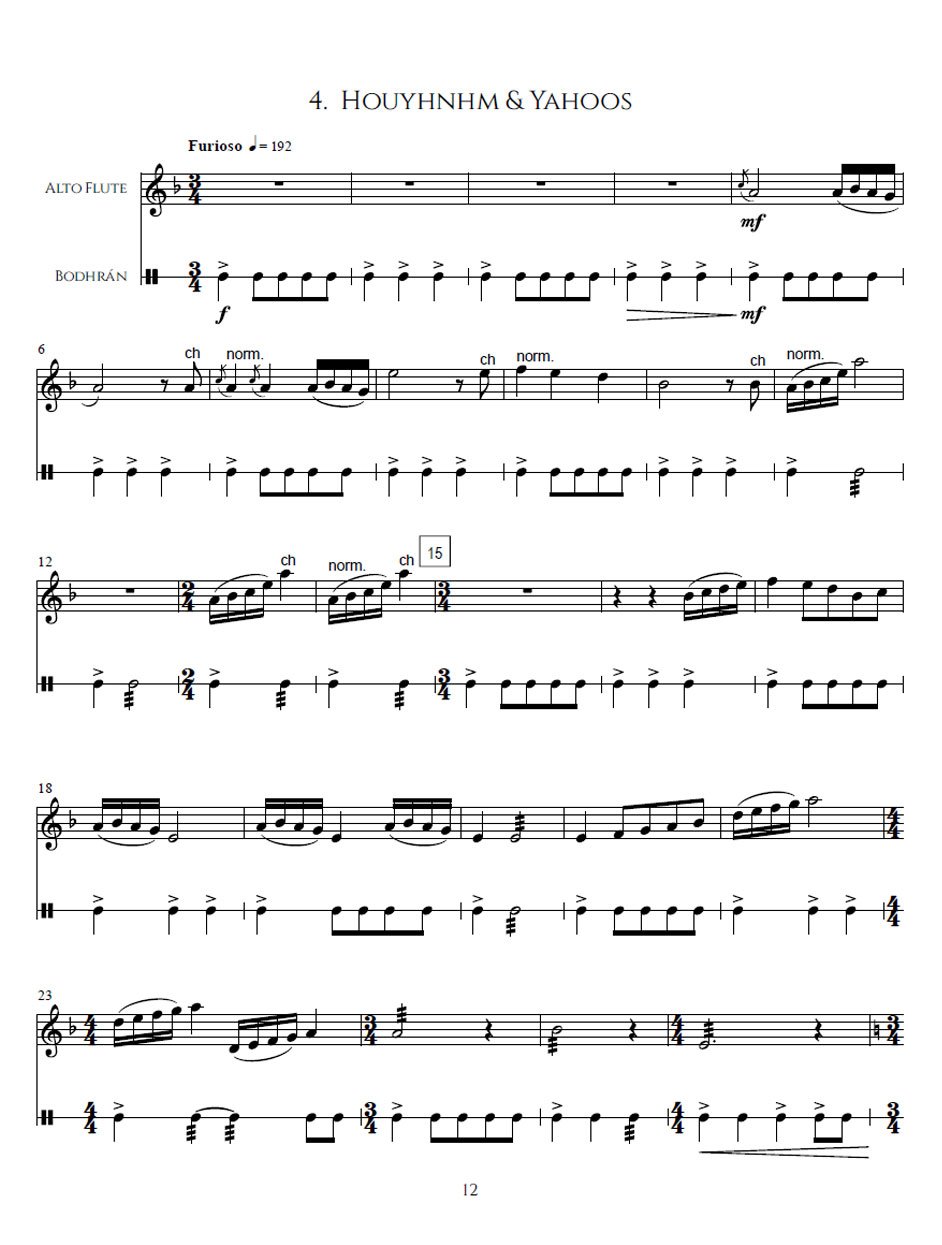 Image 2 of 6
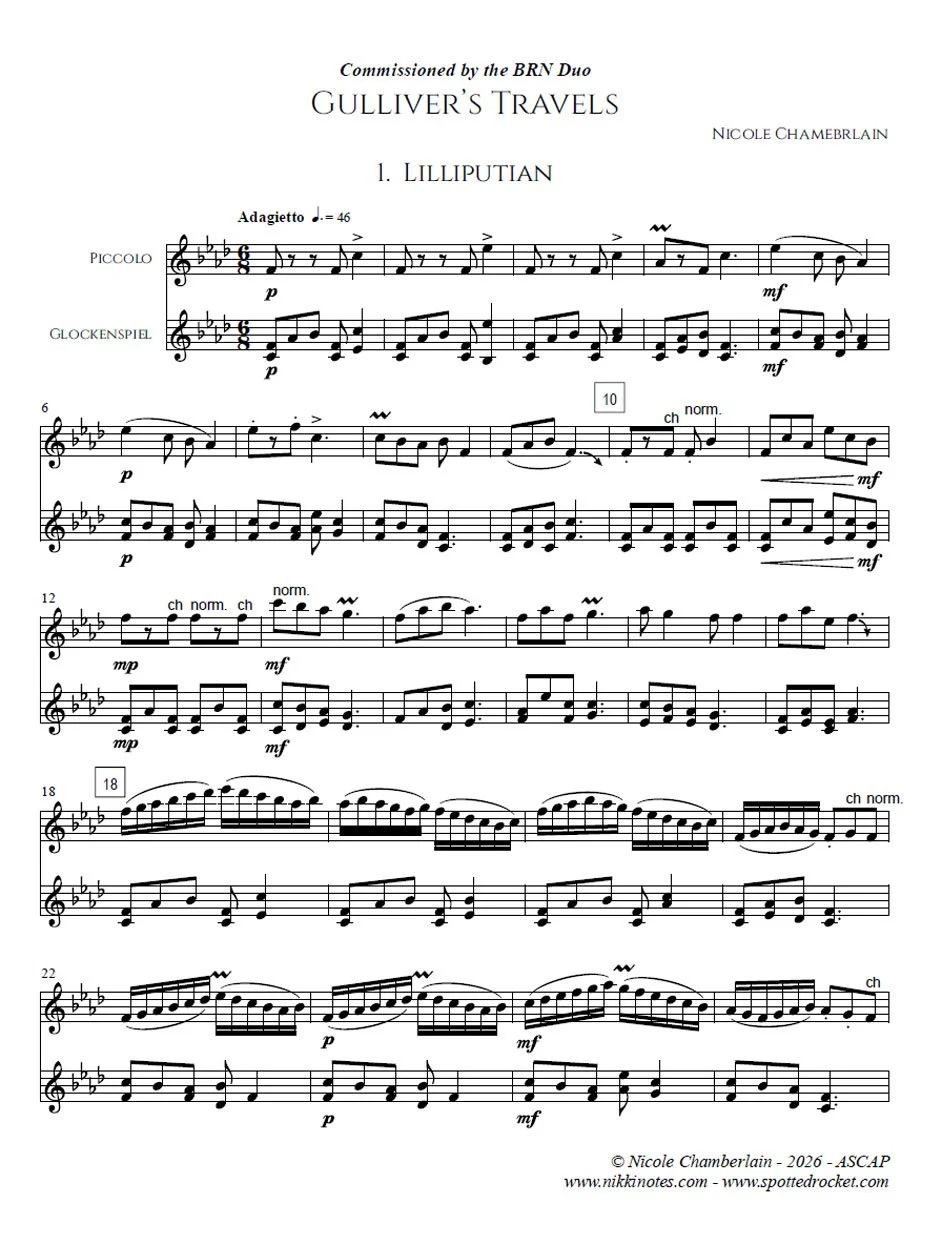 Image 3 of 6
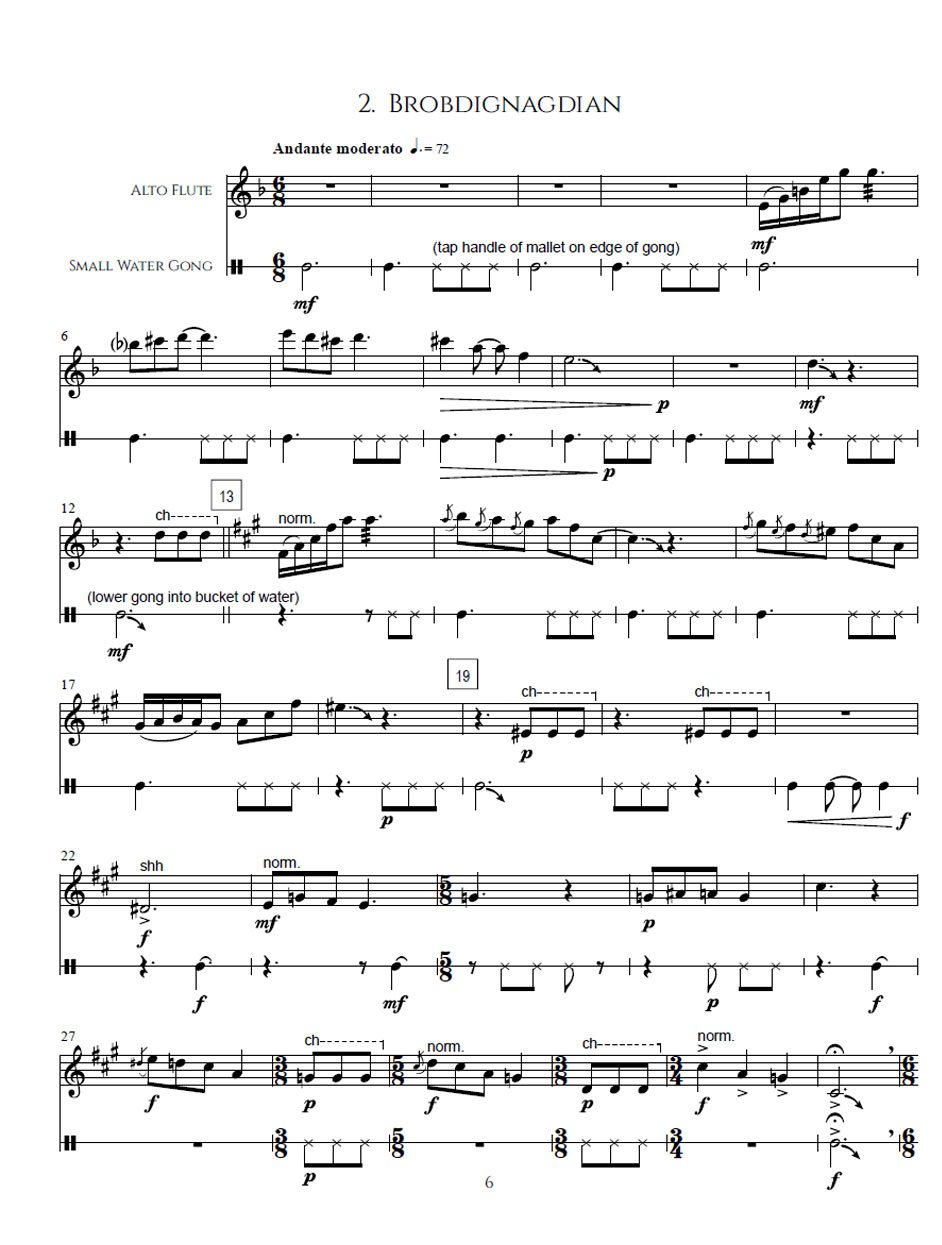 Image 4 of 6
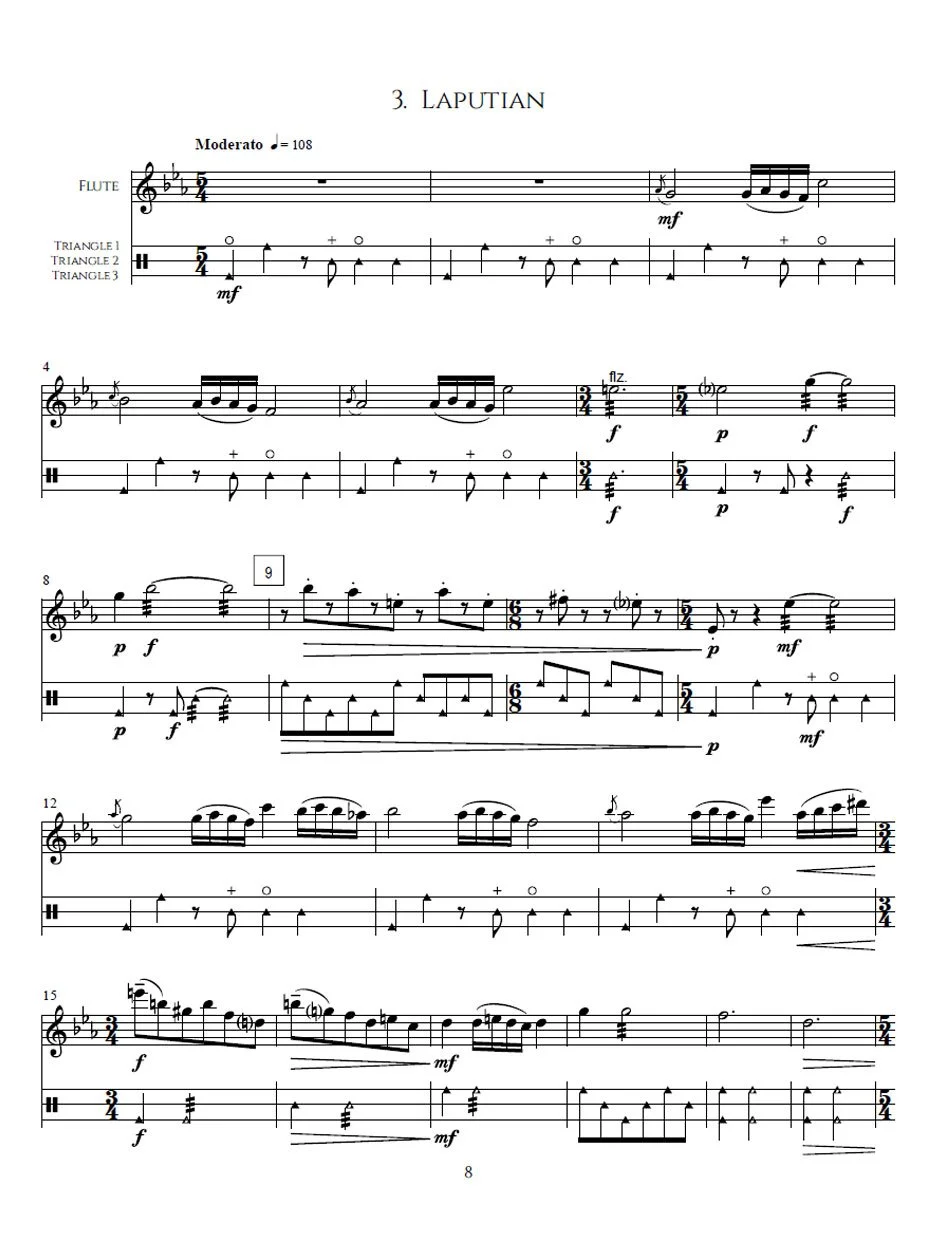 Image 5 of 6
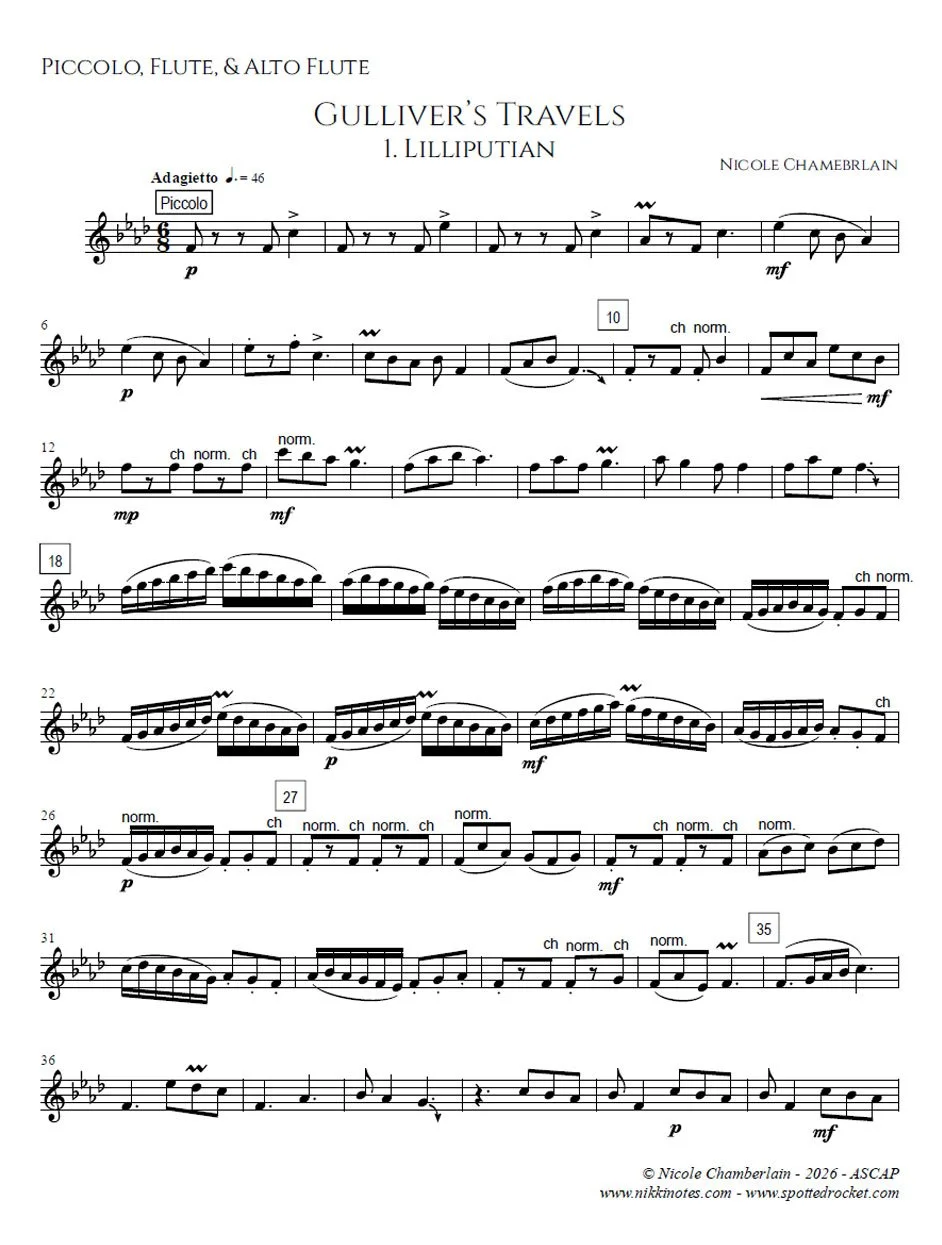 Image 6 of 6
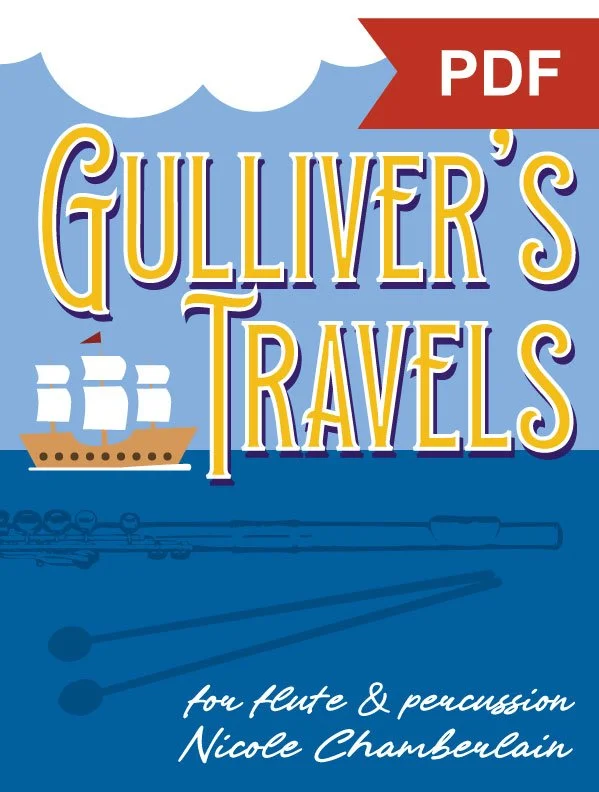
Gulliver's Travels (PDF)


Inspired by Jonathan Swift’s satirical novel, Gulliver’s Travels reimagines the traveler’s encounters as a sequence of contrasting sound worlds.
The opening movement, Lilliputian, captures the miniature world of Lilliput with delicacy and precision. Beneath its playful surface lies an undercurrent of rigidity, reflecting the pettiness and strict social codes of Lilliputian life.
In stark contrast, the second movement expands into the massive proportions of Brobdingnag. Moments of vulnerability emerge as Gulliver, now the miniature figure, navigates a world that feels both awe-inspiring and overwhelming.
The third movement, Laputian, turns toward abstraction and detachment in the floating island of Laputa. Angular melodic lines and asymmetrical rhythms suggest a society absorbed in theoretical pursuits, disconnected from practical reality.
The final movement juxtaposes two opposing natures: the rational, ordered Houyhnhnms and the chaotic, instinct-driven Yahoos. The dialogue between these forces grows increasingly tense, blurring the boundary between civility and savagery. The work concludes in ambiguity, reflecting Gulliver’s unsettled understanding of humanity.
Across its four movements, Gulliver’s Travels explores scale, perspective, and the fragile line between reason and folly, using the expressive possibilities of flute and percussion to navigate Swift’s richly imagined worlds.
Flute part includes: Piccolo, Flute, & Alto Flute
Percussion part includes: Glockenspiel, Small Water Gong, 3 different size triangles, and Bodhrán